Conversation with
John Lalor
- Thursday 22 October
- 7.30pm
- Free entry, reservation recommended
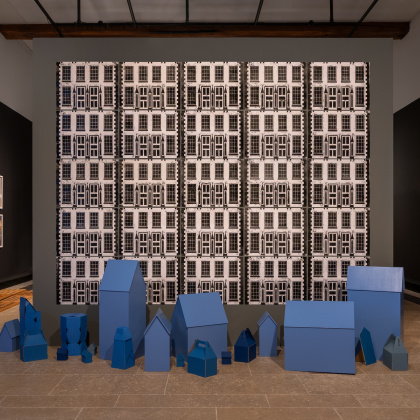
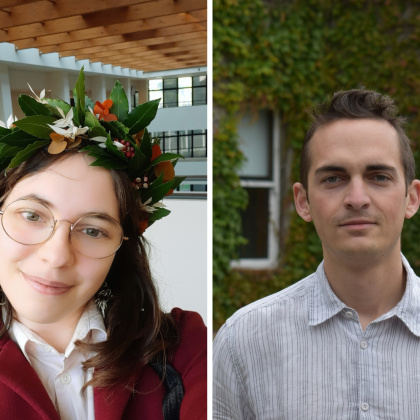
Artist John Lalor’s canvases are part of CCI’s current exhibition Everyone Should Have a Home. Tonight he discusses his new accompanying novel and film with Berlin-based Irish writer John Holten. Living and working between Ireland and Paris since the late 1980s, John Lalor is an accomplished painter, sculptor, scenographer, filmmaker and writer. He uses paintings in multiples, maquettes and scaled models, as well as texts and film, to question the medium of paint and explore the relationship between painting, film and text. His work has been exhibited widely in both Ireland and France.
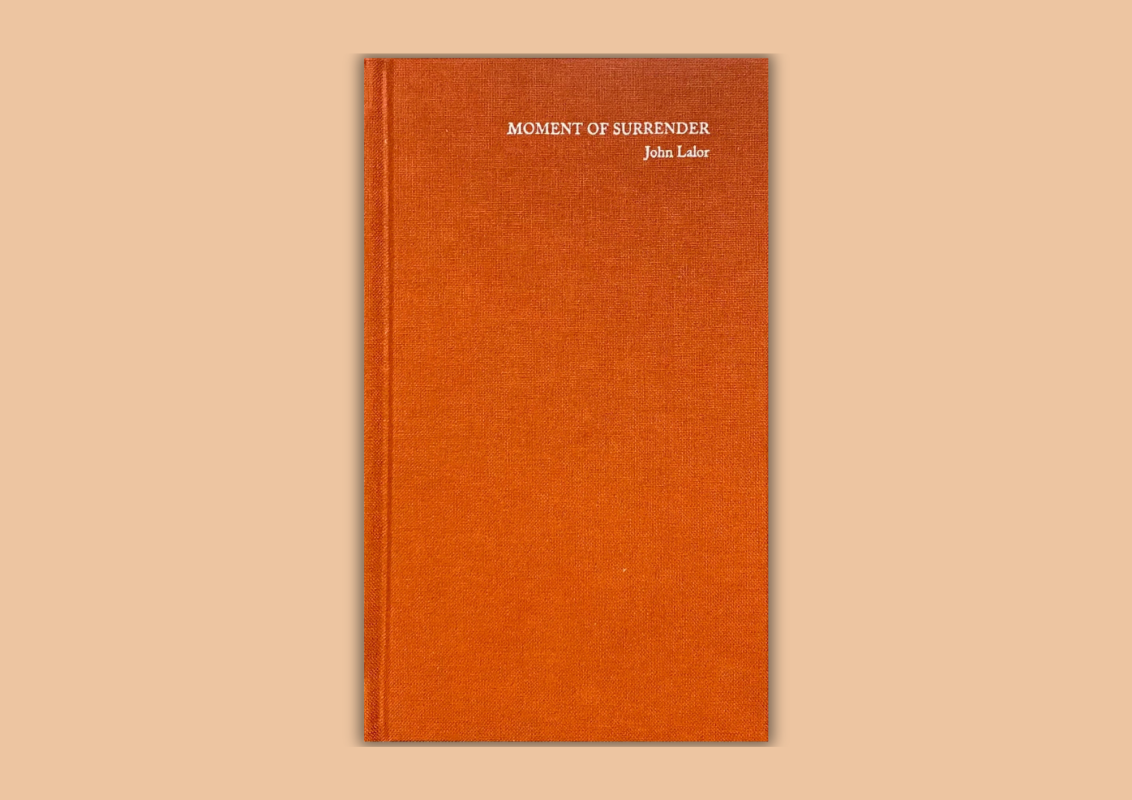
John Lalor’s novel Moment of Surrender, launched this evening, occupies an uncertain territory between fiction, personal diary, and art criticism. At its centre is the experience of a father confronting economic collapse, unemployment, debt, family responsibility, and the gradual erosion of certainty. The narrative moves through intimate moments and observations of Dublin… streets, buildings, unfinished developments, domestic spaces, weather and encounters. These details become both fictional settings and records of a particular social reality. Rather than presenting a conventional novel with a linear plot, Lalor constructs a fragmented narrative in which lived experience, observation, memory, and reflection continually overlap. The book extends the world of his paintings and film, but also stands independently as a literary work, questioning where an artwork begins and where an artist’s life ends.
Easter Weekend, John Lalor’s 30-minute fiction film set in contemporary Dublin, also follows a young father navigating the aftermath of economic collapse, family responsibility, and an increasingly uncertain world. Lalor’s approach is deliberately restrained. Dialogue is sparse, while architecture, interiors, weather, silence, and the movement of the body become carriers of meaning. The film shares his paintings’ fragmented language where moments are observed rather than explained, allowing narrative to emerge gradually through repetition and duration. The city becomes both setting and psychological landscape. Together, film and painting create a cinematic continuum in which a still image can feel like a remembered film frame, while the film itself becomes a painting unfolding in time.
You might like
See more →