Conference
Talking Franco-Irish History
- Thursday 29 October
- 7.30pm
- Free entry, reservation recommended
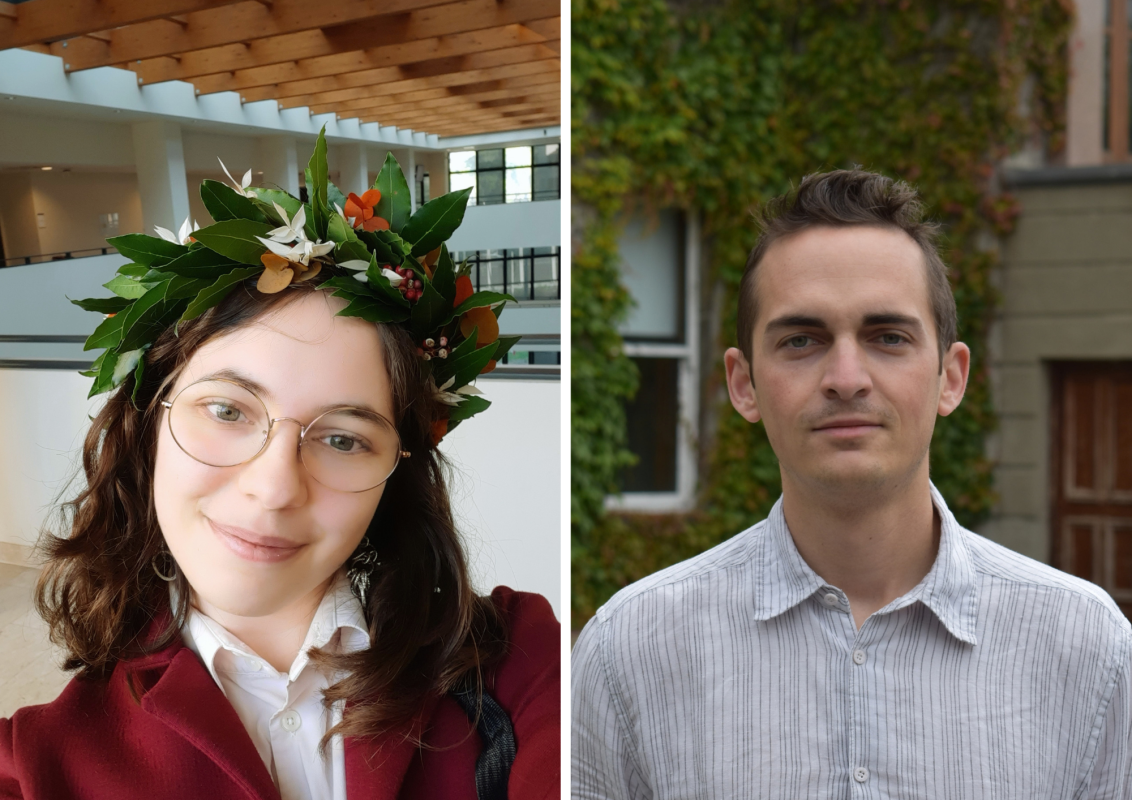
This evening two Ireland-based historians Sofia Bellegia and Simon Viot present their research on, respectively, the Franco-Irish saint St Laurence O’Toole, and the network of Irish Capuchin friaries in France. Both were awarded Rev. Liam Swords Foundation Bursary Awards for residencies at the CCI during summer 2026 and return this evening to share their findings.
Sofia Bellegia
The miracle collections of St. Laurence O’Toole (†1180)
As abbot of Glendalough, archbishop of Dublin, and papal legate in Ireland, Laurence O’Toole (Lorcán Ua Tuathail) was a central figure in the twelfth-century reform of the Latin Church and the Anglo-Norman invasion of Ireland in 1169. After his death in Eu, Seine-Maritime (Normandy), in 1180, three Latin miracle collections were composed at the pilgrimage shrine of his burial over the course of the following decades. Together, they record approximately 250 accounts of healing and intercession attributed to Laurence, benefiting petitioners from all levels of late medieval French society. Drawing on manuscript research undertaken this summer as part of ongoing work towards a critical edition, this lecture will present some preliminary findings on this little-studied corpus, which represents an invaluable resource for exploring French society in the later Middle Ages, as well as the European cultual memory of an Irish saint.
Simon Viot
The Irish Capuchins in France in the seventeenth and eighteenth centuries
Capuchins emerged in the early sixteenth century as a Franciscan branch devoted to return to the strict observance of the rule of Francis of Assisi. Irishmen started to join the order in the 1590s then established two friaries in the northeast of France in the 1620s and 1630s which endured until the French Revolution. In two centuries a few hundred men made their profession in these friaries. The Irish Capuchins used these institutions as centres to organise pastoral work among local populations of mixed confession, but also as headquarters to prepare Irishmen for missionary work in Ireland to challenge the spread of Protestantism there. Based on archival work done in Paris during the summer, thanks to the support of the Rev. Liam Swords Foundation bursary, this paper will present the network of the Irish Capuchins, their religious life, work and world, as well as the evolution of their movement in the seventeenth and eighteen centuries and in the aftermath of the French Revolution.
You might like
See more →